
The history of the tayu reaches back to the early Edo period.
It began on the stage of the women’s kabuki

Her origins are said to lie in the women’s kabuki that tradition credits to Izumo no Okuni.
Among the women of the licensed quarters who took to the stage in those days, those most accomplished in their art came to be called tayu — and that, tradition holds, was the beginning.
The word tayu, in other words, first pointed to the summit of the arts.
The four great licensed quarters and the highest of titles
In time, the title of tayu became something exceptional, given only to the highest-ranking women in the four great licensed quarters.
Shimabara in Kyoto, Yoshiwara in Edo, Shinmachi in Osaka, and Maruyama in Nagasaki — these four.
The tayu received guests of the upper classes: court nobles and feudal lords, retainers of the shogunate, and men of letters.
Her standing was remarkably high. Tayu derives from a courtly term for holders of the fifth rank, and tradition describes a tayu as receiving treatment comparable to shogoi, the Senior Fifth Rank — and as being permitted even to perform her arts before the imperial court.
The tayu was never judged by beauty alone. Dance, music, waka poetry, tea, incense, and courtly manners — she was a truly exceptional figure, versed in every art and every branch of learning.
The long years of training that began with the kamuro
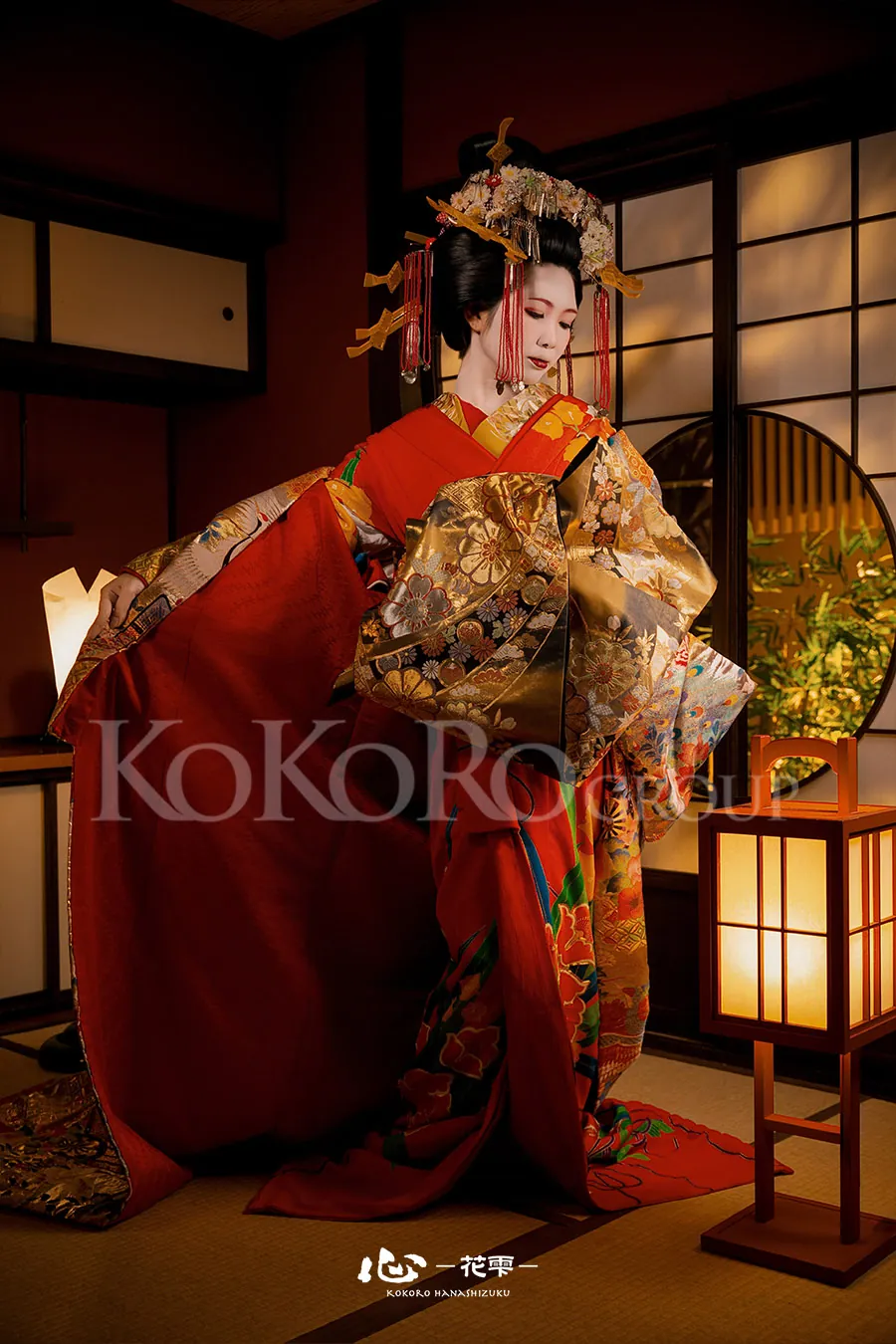
And yet only a very few women could ever become tayu.
As young girls, at around seven or eight, they entered an okiya as apprentices known as kamuro. Running errands, they learned little by little the manners of receiving guests and the bearing of daily life.
From there the training grew demanding. Even after joining the women of the quarter, they had to keep refining everything — beauty, learning, art, and grace.
Only the most outstanding among them were allowed the name of tayu.
Behind the splendour of the title lay years of discipline, accumulated from earliest childhood.
The tayu was a figure who, across the ages, mastered beauty and art and captivated all who saw her. The more one learns of that history, the more one feels the pride and resolve these women carried, and the depth of Japanese culture itself.